

Is it ADHD, Anxiety, or Trauma? Untangling Overlapping Symptoms and How Therapy Can Help

As a practice specializing in women’s health, we often encounter patients whose mental health symptoms were ignored, misunderstood, or misdiagnosed. This is frequently the case with clients who come to us trying to figure out if they have anxiety, a trauma response, or ADHD. While diagnostic labels can only get you so far, helping clients better understand what is driving their symptoms can be incredibly validating, and untangling symptoms can really help.
Let’s break it down.
Why Are Anxiety, ADHD, and Trauma Symptoms Confused
ADHD, anxiety disorders, and trauma responses all affect:
Attention and focus
Emotional regulation
Energy levels
Memory
How safe or overwhelmed you feel in daily life
Because these symptoms overlap, many people are misdiagnosed and/or are confused by their symptoms. Additionally, it’s very possible to have more than one condition at the same time. Symptoms can also present differently in women, and diagnostic criteria do not always match lived experience. What key in helping someone understand what they are struggling with, is not just listening to their symptoms, but undertanding whats driving them.

ADHD: A Brain Wired for Different Regulation
ADHD (Attention-Deficit/Hyperactivity Disorder) is a neurodevelopmental condition—meaning it’s about how the brain is built and how it regulates attention, motivation, and stimulation.
Common ADHD experiences include:
Difficulty sustaining attention (especially for boring tasks)
Hyperfocus
Disorganization and time blindness
Forgetfulness
Impulsivity (speaking, spending, deciding quickly)
Emotional intensity and quick emotional shifts
Chronic overwhelm from everyday demands
Sensitivity to rejection
What’s driving it:
People with ADHD have differences in dopamine regulation and can struggle with executive functioning. This isn’t about fear or danger—it’s about interest, stimulation, and regulation.
Anxiety: A Nervous System on High Alert
Anxiety is rooted in anticipation of threat—real or imagined. It’s your brain trying (overzealously) to protect you. I often tell clients that an anxious brain is like an overactive smoke detector trying to alert you to a fire when there is not even any smoke.
Common anxiety symptoms include:
Racing thoughts, worry loops
Difficulty concentrating because of worry
Muscle tension, restlessness
Avoidance of situations that feel risky
Trouble sleeping
Perfectionism or people-pleasing
Fear of making mistakes
What’s driving it:
Anxiety is fueled by fear of the future and a nervous system stuck in “what if?” mode.

Trauma: A Body That Learned to Survive
Trauma isn’t just about what happened—it’s about how your nervous system adapted to survive an experience(s) that were too overwhelming to cope with.
Trauma responses can include:
Hypervigilance or constant scanning for danger
Dissociation or feeling “spaced out”
Emotional numbness or sudden emotional floods
Memory gaps or fragmented memories
Difficulty trusting others
Strong reactions to specific triggers
Feeling unsafe even when things are objectively okay
What’s driving it:
Trauma lives in the body and nervous system. It’s about past experiences of threat, danger, or overwhelm that have not been integrated or resolved.
When ADHD, Anxiety, and Trauma Symptoms Overlap
Here’s where things get tricky—many symptoms of anxiety, ADHD, and trauma can look the same:
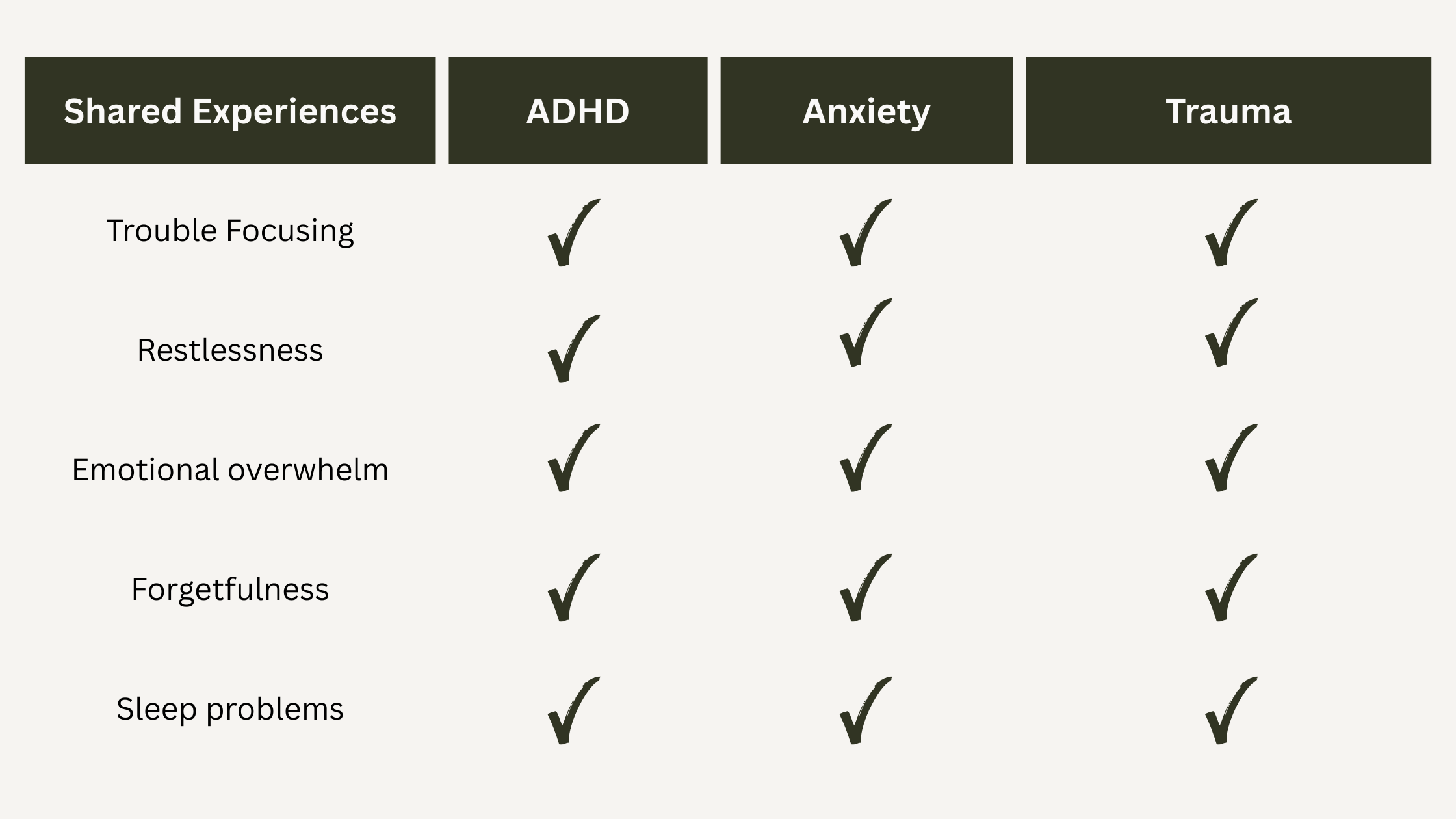
If you’ve ever wondered “Why does none of this quite fit?”, you’re not alone—and you don’t need to figure it out by yourself.
Can You Have ADHD, Anxiety, and Trauma at the Same Time?
You can absolutely have:
ADHD and anxiety
ADHD and trauma
Anxiety because of untreated ADHD
Trauma that mimics ADHD
In fact, untreated ADHD often leads to anxiety after years of missed deadlines, criticism, and burnout. Trauma can also worsen ADHD symptoms by keeping the nervous system in survival mode.
This is why accurate assessment—and listening to your lived experience—matters so much.

How Therapy Helps Untangle ADHD, Anxiety, and Trauma
Properly diagnosing and treating ADHD, trauma, or anxiety is not about slapping on a label—it’s about helping you better understand your brain and nervous system, to improve your coping and functioning in your everyday life. Therapy can help you identify whats drivng your symptoms, address shame from years of misdiagnosis, and provide treatment strategies tailored to your experience. If you struggle with focus, overwhelm, emotional intensity, or feeling “too much” or “not enough,” we can help.
At Dr. Emma Basch & Associates, we provide evidence-based collaborative therapy with specialized support for Anxiety, ADHD, and Trauma. Ready to take the next step? Reach out for support today.